

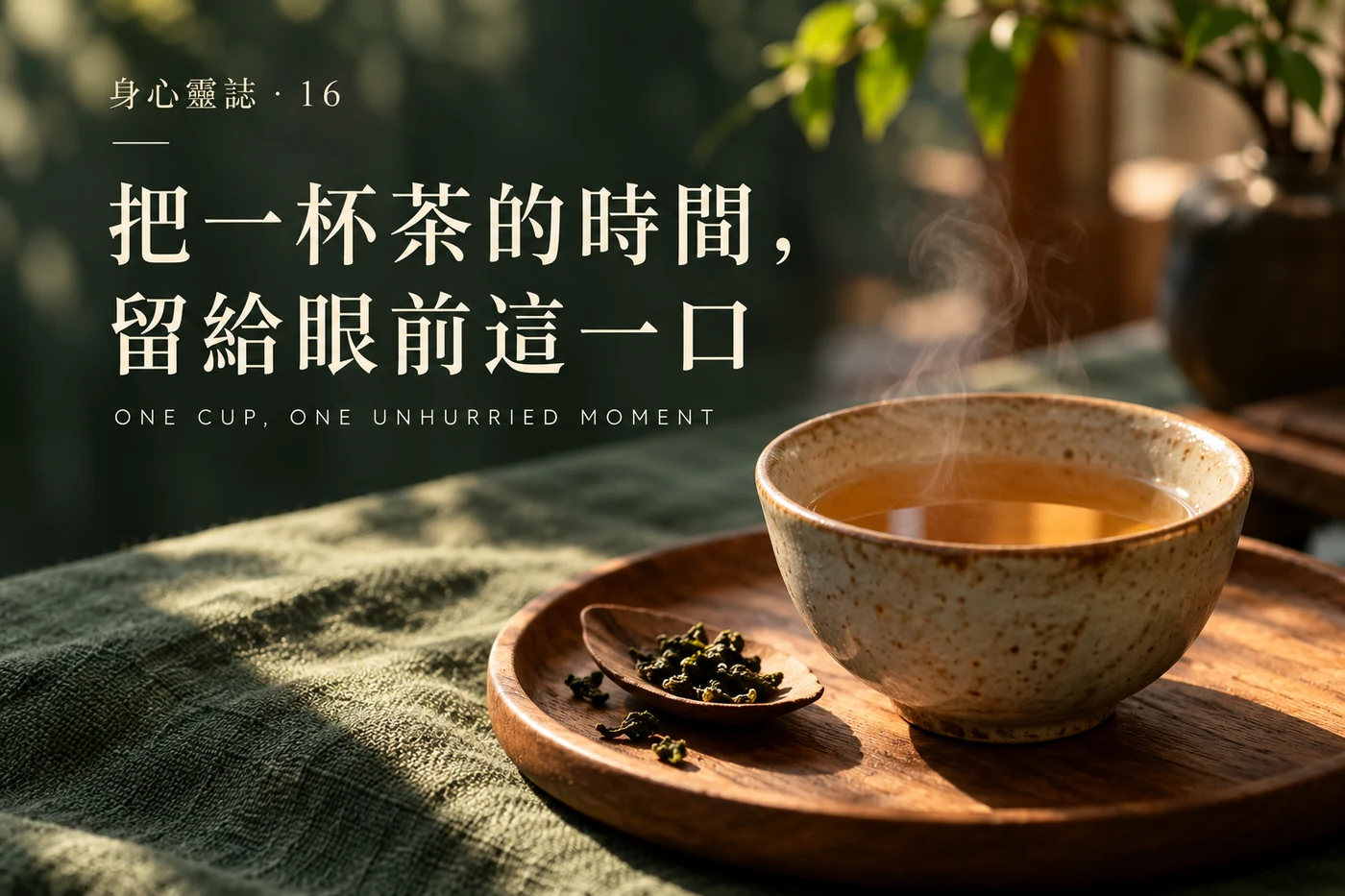
Choose a drink that suits you
A tea bag, loose leaves or a glass of water can all work. Choose something you actually want to drink, rather than a product with the most impressive promises. Tea contains caffeine; Hong Kong’s Centre for Food Safety advises caffeine-sensitive people to pay attention to their intake. Follow any existing dietary guidance relevant to you.
Use an intact cup that is comfortable to handle, place it securely and let a hot drink reach a comfortable temperature. Keep it where children or pets cannot easily knock it over. Practical care belongs in this pause too.
Slow down one part of preparation
While the drink is being prepared, notice the cup’s colour, a safely held handle or the sound of pouring water. Choose one detail rather than trying to engage every sense. An ordinary drink does not need to become a performance.
The NHS description of mindfulness includes noticing present sights, sounds, smells and tastes. Here, that can mean observing with less evaluation. If you dislike a smell, acknowledge it; you do not have to describe every sensation as pleasant.
Let one sip remain one sip
When the temperature is comfortable, take a small sip and notice how it compares with what you expected. It may seem mild, strong or slightly astringent. Your own words are enough; specialist tasting vocabulary is unnecessary.
If your phone rings, decide whether the matter needs attention now or can wait until after this sip. Paying attention does not mean isolating yourself from life. If your thoughts wander, return to the cup or end the pause without having to make up lost time.
Share without prescribing a preference
When drinking with someone, ask what they would like instead of deciding for them. Strong tea, weak tea and no tea are equally possible choices. Conversation can stay ordinary, and comfortable silence needs no explanation.
Clean the cup afterwards so it is ready for another day. There is no required outcome: you may remember a flavour, or record nothing at all. The value of this small pause lies in the room it gives you to choose and notice.
We share observations about sound and everyday self-care. Experiences differ; take part at a pace that feels comfortable, and pause whenever you wish.
Further reading & sources
These sources offer further context. Everyday exercises are editorial suggestions, rather than individual medical advice.